
UPS Systems
How to Choose a UPS in Ghana: A Practical Sizing Guide
· 3 min read · Energy Links Ghana
Buying a UPS in Ghana is rarely a question of brand first. It is a question of load, runtime and voltage conditions — in that order. Get those three right and almost any reputable unit will serve you well. Get them wrong and even an expensive UPS will be replaced within two years.
This is the method our engineers use on every site survey.
Step 1: list only your critical load
Walk the office and write down what genuinely cannot lose power. Not everything — only what would cost you money or data if it switched off.
- Servers, network switches and routers
- Point-of-sale terminals and the PC that runs them
- Access control, CCTV recorders and alarm panels
- Medical or laboratory equipment
- The two or three workstations that must keep working
Air conditioners, kettles, printers and laser copiers do not belong on a UPS. Their start-up surge is many times their running load and they will trip the unit or shorten battery life dramatically.
Step 2: add up the watts, then convert
Every device has a label or a datasheet giving its draw in watts (W) or volt-amps (VA). Add the watts of everything on your list.
To convert watts to the kVA figure a UPS is sold in:
- Add up total watts — say 2,400 W
- Divide by a power factor of 0.8 — 2,400 ÷ 0.8 = 3,000 VA
- That is 3 kVA
Step 3: add headroom
Never buy a UPS that matches your load exactly. Running a unit at 100 percent capacity cooks its batteries and leaves you no room to plug anything else in.
Add 25 to 30 percent headroom. A 3 kVA calculated load should be served by a 4 kVA unit.
That also covers the growth nobody plans for — the extra switch, the second recorder, the new workstation.
Step 4: decide how long you actually need
This is where most budgets are either wasted or wrecked. Runtime is set by the battery bank, not by the UPS, and batteries are the expensive part.
- 5 to 15 minutes is enough if you only need to shut servers down cleanly, or to bridge the gap until a generator starts
- 1 to 4 hours is what an office without a generator needs to keep working through a typical outage
- Longer than 4 hours is usually cheaper to solve with an inverter and a larger battery bank, or with solar
Be honest about whether you have a generator. If you do, you need a short bridge, not a long one.
Step 5: match the UPS to Ghana's voltage, not just its power
This is the step imported sizing guides leave out, and it is the one that matters most locally. Our mains does not simply fail — it sags, spikes and comes back hard.
So look for:
- A wide input voltage window, so the UPS rides out sags instead of switching to battery every few minutes
- Online (double-conversion) topology for server rooms and medical equipment, which rebuilds the waveform completely
- Line-interactive as the sensible choice for ordinary office equipment
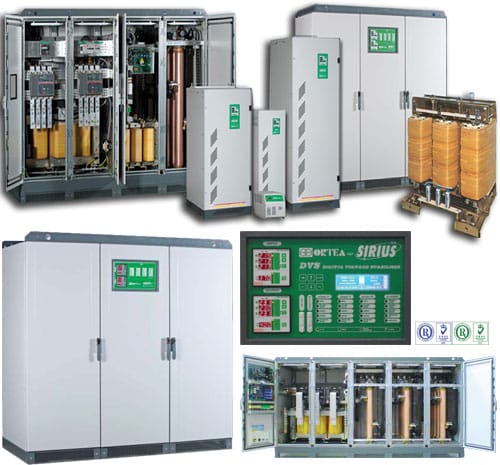
- A separate voltage stabilizer ahead of the UPS where the supply is especially bad — it stops the UPS wearing itself out correcting the mains
A worked example
A small clinic in Accra lists: one server (400 W), a network rack (250 W), three reception PCs (450 W), a CCTV recorder (100 W) and two lab analysers (900 W). Total 2,100 W.
- 2,100 ÷ 0.8 = 2,625 VA
- Plus 30 percent headroom = about 3,400 VA
- Buy a 4 kVA online UPS, sized for 2 hours, with a stabilizer ahead of it
Common mistakes we are called out to fix
- Sizing from the total office load instead of the critical load — paying for three times the UPS needed
- Putting an air conditioner on the UPS — the unit trips on the compressor surge
- Ignoring battery replacement — batteries are consumables, good for three to five years, and they must be budgeted for
- No stabilizer on a bad supply — the UPS corrects the mains all day and its batteries never last
Get the survey done properly
We will walk your site, measure the actual load and the actual voltage behaviour, and quote the right unit rather than the biggest one. Contact us or browse the UPS systems and stabilizers we stock.
- UPS Ghana
- UPS sizing
- kVA
- power protection
Need help choosing the right equipment?
Our engineers will size it against your actual load, not a guess.
Talk to usMore from the blog
Power Protection
Why a Voltage Stabilizer Saves More Than It Costs
Ghana's mains does not just go off — it sags and spikes while it is on. That is what quietly destroys compressors, boards and motors, and a stabilizer is the cheapest insurance against it.
· 3 min read
Inverters & Solar
Inverter or Generator? Choosing Backup Power for a Ghanaian Home
A generator is cheaper to buy and more expensive to live with. An inverter is the opposite. Here is how the real cost, noise, fuel and maintenance compare over five years.
· 3 min read