
Power Protection
Why a Voltage Stabilizer Saves More Than It Costs
· 3 min read · Energy Links Ghana
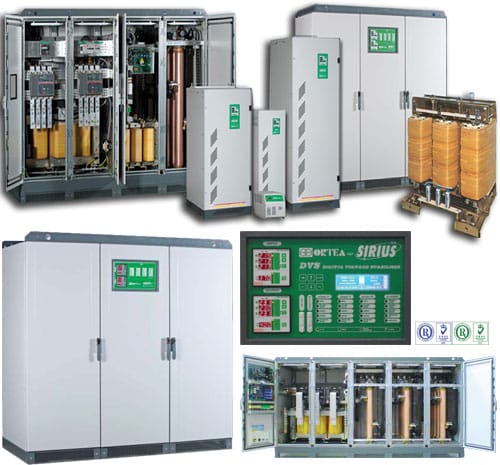
Most equipment damage blamed on "light off" is not caused by the power failing. It is caused by the power being present but wrong — sitting well below or above 230 V for hours, then slamming back when the supply is restored.
A voltage stabilizer, also called an automatic voltage regulator or AVR, is the cheapest protection against that, and it is still the single most skipped item on equipment lists in Ghana.
What bad voltage does to equipment
Under-voltage is the quiet killer. When the supply sags, motors and compressors draw more current to produce the same work. They run hot. Insulation degrades. Then the compressor in your fridge, air conditioner or cold room fails — months later, and nobody connects the two events.
Over-voltage and spikes are the loud killer. A surge when supply is restored punches straight through power supplies and control boards. Televisions, fridge inverter boards, pumps and anything with a microprocessor die instantly.
Both happen on the same supply, often on the same day.
What a stabilizer actually does
It watches the incoming voltage continuously and corrects it, holding the output near 230 V. When the mains drifts to 180 V it boosts; when it climbs to 270 V it bucks it back down. Your equipment only ever sees voltage it was designed for.
If the supply goes outside the range it can correct, a good stabilizer disconnects the load rather than passing the problem on.
What needs one
Anything with a motor, a compressor or a control board — which is nearly everything that costs real money:
- Fridges, freezers and cold rooms — compressor failure is expensive and ruins stock with it
- Air conditioners — the same compressor problem, at a higher price
- Water pumps — motor windings burn out under sustained low voltage
- Medical and laboratory equipment — readings drift before the equipment fails
- Server rooms — a stabilizer ahead of the UPS stops the UPS correcting the mains all day and killing its own batteries
- Workshop machinery — motors and drives are intolerant of sustained sag
Sizing one
Stabilizers are rated in kVA, like a UPS, and the arithmetic is the same:
- Add the watts of everything behind the stabilizer
- Divide by 0.8 to get VA
- Add at least 30 percent headroom — more if you are protecting motors, because their starting surge is several times their running load
For a whole house, a 5 to 10 kVA unit at the main board is typical. For a single air conditioner or cold room, a dedicated smaller unit at the appliance is often the better buy.
Stabilizer, UPS or surge protector?
They are three different jobs and they are not interchangeable:
- A surge protector blocks short spikes only. It does nothing about a supply sitting at 180 V all afternoon.
- A stabilizer corrects sustained wrong voltage, but gives you no power when the mains fails.
- A UPS keeps the power on when the mains fails, but wears itself out if it also has to fight bad voltage all day.
On a difficult supply, the correct arrangement is a stabilizer first, then the UPS behind it. The stabilizer handles the mains; the UPS handles the outages; the batteries last the years they were supposed to.
The arithmetic that decides it
Set the cost of one stabilizer against the cost of one compressor — plus the engineer, plus the lost stock, plus the days without cooling. The stabilizer is almost always the smaller number, and it protects everything behind it rather than one appliance.
We stock EAST, Inform and Siel Ortea stabilizers and we will size one against your actual readings, not a guess. See what we have or ask us to come and measure.
- stabilizer Ghana
- AVR
- voltage
- surge protection
Need help choosing the right equipment?
Our engineers will size it against your actual load, not a guess.
Talk to usMore from the blog
Inverters & Solar
Inverter or Generator? Choosing Backup Power for a Ghanaian Home
A generator is cheaper to buy and more expensive to live with. An inverter is the opposite. Here is how the real cost, noise, fuel and maintenance compare over five years.
· 3 min read
UPS Systems
How to Choose a UPS in Ghana: A Practical Sizing Guide
Most UPS systems in Ghana fail early because they were sized by guesswork. Here is the method we use on every site survey, from listing your critical load to picking the right kVA rating.
· 4 min read